When to Visit Bibury, Castle Combe and Bourton-on-the-Water: A Crowd-Avoidance Calendar
October 10, 2026 - Villages
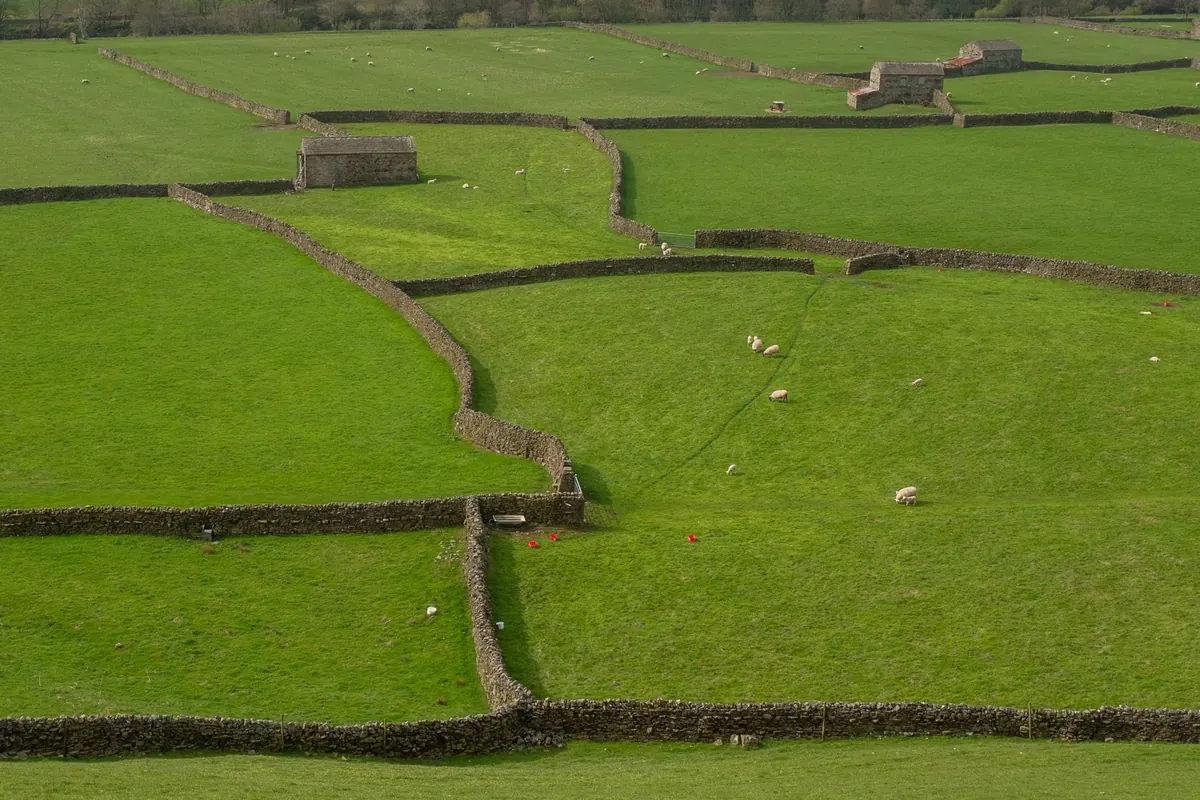
Walk any lane between Chipping Campden and Bath and you will pass dozens of them: long, low ribbons of grey-gold stone running up hillsides, along old drove roads and around sheep fields. They look as though they grew there. They did not. Every yard was laid by hand, stone upon stone, without a drop of mortar, and many have stood through two centuries of frost, livestock and gales.
Understanding how they are built changes the way you see the Cotswolds. It also explains why a wall that has stood for 200 years can be ruined in a decade by neglect, and what you can do about it.
A dry stone wall contains no cement, no lime, no pins and no fixings. It holds together through three things: careful placement, friction, and its own weight.
Each stone sits on at least two below it, and joints are broken like brickwork so no vertical gap runs up through the wall. The two faces lean very slightly inward — wallers call this the batter — so gravity pushes the structure together rather than apart. Between the faces is a core of hearting: small stones wedged in by hand, which stops the outer faces from bulging. Through stones, sometimes called binders, span the full width every metre or so and tie the two sides into one mass.
A wall with a bulging face, a hollow top or a row of missing stones is not just untidy. It is a structure losing the one thing that keeps it standing.
The method has barely changed in centuries. Roughly, it runs like this:
A skilled waller will handle a stone a dozen times before it is finally set. That is why a good wall looks calm and inevitable, and a bad one looks like a pile of rocks pretending to be a wall.
The landscape reads as it does because of three things arriving at once: sheep, enclosure and stone. Limestone is here in quantity, split easily from shallow quarries, and it is the same oolitic stone that builds the cottages and churches. On thin upland soils, a wall of local stone was often more practical than a hedge, which needs water and years to establish.
Most of the field patterns you walk through today were fixed during the parliamentary enclosures of the eighteenth and nineteenth centuries, when common land was divided and boundaries marked. Some walls follow much older lines — medieval boundaries, or field systems older still. Look across a valley after a hard frost and you can sometimes trace walls that no longer exist, ghost lines running through the grass.
Once you know the anatomy, walls become readable. Height tells you purpose: low walls between fields, taller ones along roads and gardens, where the wall had to keep more out. Colour tells you about the seam the stone came from — creamy, honey, grey-blue — and about the lichens that have colonised it, which take decades to establish.
Walls are also habitat. Bees nest in sunny south-facing joints, slow worms and voles use the cavities, wrens and robins hunt along the base, and ferns, mosses and pennywort grow where rain lingers. A wall is a hedgerow made of stone, and it supports a similar cast of creatures.
What you will also notice, once you look, is damage. A section pushed out by a fallen branch. A sapling rooted in the top. Ivy prising the coping apart. Each of these is the start of a gap, and a gap is how most walls eventually fail.
The Cotswold escarpment holds the greatest concentration. The lanes and footpaths above Broadway, Stanton and Snowshill are thick with well-built walls, and the Cotswold Way between Chipping Campden and Winchcombe runs beside them for mile after mile. Further south, the high ground around Guiting Power and Naunton shows walls following the contours of the wolds, while the Coln valley near Bibury and Ablington offers the classic postcard combination of wall, water and stone cottage.
Go out in low winter light, when the sun skims across the fields. That is when the courses, the through stones and the old buried boundaries show most clearly — and when you can see how much of this landscape is held up by nothing but good workmanship and gravity.
If the walls have got under your skin, the next step is to try building one. The Dry Stone Walling Association runs training courses across the country and can put you in touch with professional wallers in your area; a two-day beginner course is enough to teach the basics of footing, face work and hearting. Conservation volunteers and the Cotswold National Landscape's voluntary wardens also run practical days where you can help repair walls on public paths.
Wear stout boots, bring gloves and eye protection, and expect to lift more stone than you imagined. Start small — gapping up a few metres on your own land is the best training there is. And if you simply want to enjoy the walls rather than build them, walk a stretch of the escarpment in winter, look closely at how the stones sit, and you will never see a Cotswold lane in quite the same way again.
Photo: Mike Norris / Pexels

A month-by-month, day-by-day guide to seeing Bibury, Castle Combe and Bourton-on-the-Water before the coaches arrive...
Northern, central or southern Cotswolds? A practical comparison of the three village clusters, with honest advice on...
Copyright © 2026 Noble Cotswold. All Right Reserved.